
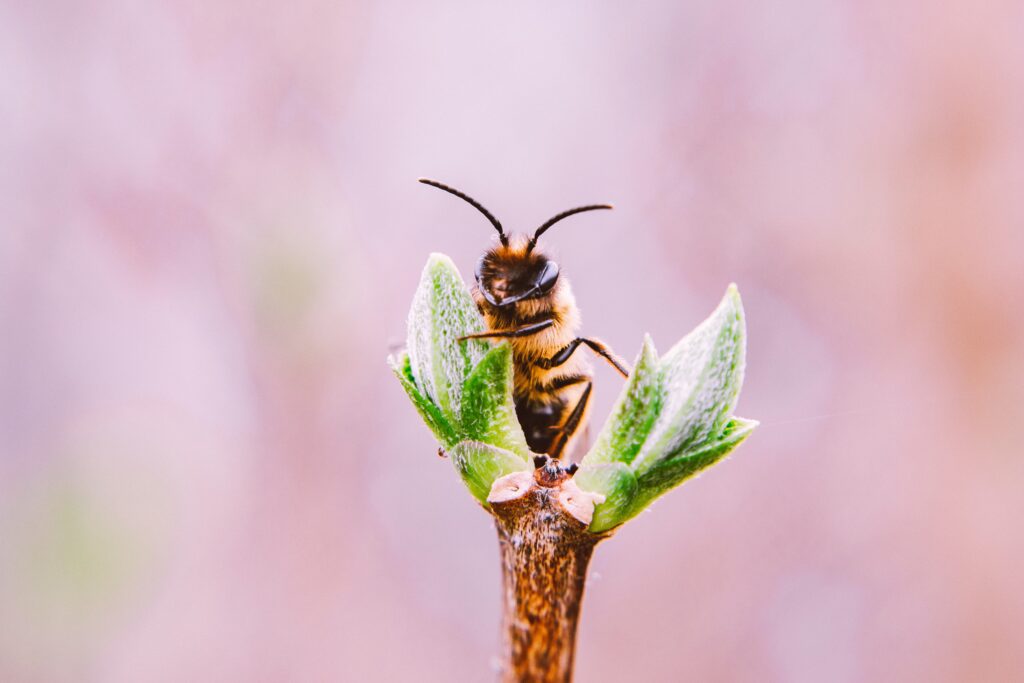
Honey bees contribute to every area of the ecology as pollinators. They encourage the development of trees, flowers, and other plants that provide food and shelter for both large and tiny animals. Bees support intricate, interconnected ecosystems that support the coexistence of numerous different species. In this blog post, we’ll go into greater detail regarding the role that bees play in the environment and and possible outcome of their absence.
Due to deliberate human transfer, honey bees, which are native to Southern Europe, Africa, and the Middle East, have naturalized in ecosystems all over the world. While feral honey bee populations may be robust in many regions of the world, the researchers point out that a variety of variables, such as habitat loss, pesticides, infections, parasites, and climate change, pose a threat to the health of managed honey bee colonies [1].
The five most important impacts of honey bee to the environment can be counted as; food source, pollunation, contrubuting to the plant growth, biodiversity and providing shelter to the other insects and animals.
Bees produce honey in order to provide food for their colonies during the chilly winter months. Although honey has been gathered by humans for thousands of years, it is also enjoyed by other species as a delicious treat. Animals such as birds, racoons, opossums, and insects will break into beehives to sample the nourishing honey.
It may sound brutal, but you’ve probably heard of the food chain. Some creatures survive by eating other creatures. The food chain also includes bees themselves. At least 24 different bird species, such as the starling, blackbird, and ruby-throated hummingbird, feed on bees. Bees are also consumed by numerous spiders and insects, including praying mantises and dragonflies.
Plants need pollen to be transferred from the male (the anther) to the female (the flower) parts in order to germinate (the stigma). The pollen grains that bees distribute on the sticky surface as they go between different flowers in search of nectar enable plants to develop and create the fruit [2].
Bees pollinate billions of plants annually, including millions of agricultural crops, earning them the reputation as hard workers. In fact, one in every three pieces of food we eat is thanks to the bees. Many of the plants that provide us with food would disappear without them.
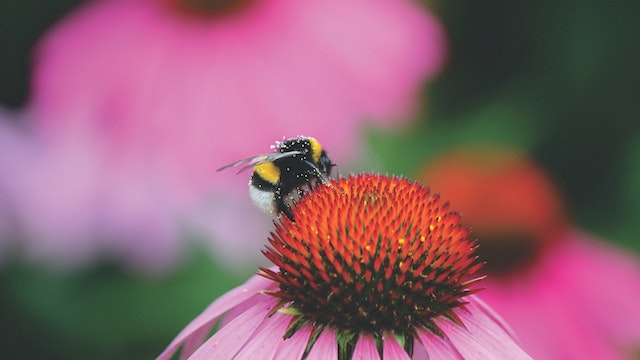
And pollinators are not just necessary for the growth of fruits and vegetables grown in farms. The pollination of numerous wild plant species is also reliant on insects. Many seeds, nuts, berries, and fruits—which are essential food sources for wild animals—are produced with the help of the bees.
Although bees are famous for their magnificent hives, they also contribute to the construction of millions of other insects’ and animals’ houses. They are essential pollinators for the development of temperate deciduous forests, savannah woodlands, and tropical forests. Without pollinators like bees, many tree species, including willows and poplars, could not flourish [2].
According to a recent study, up to 40% of insect species worldwide are in decline. Eight times more insects are going extinct than vertebrates. In protected areas in Germany, researchers have observed losses of up to 75% of the total insect population [3].
Scientists beleive that; invasive species, habitat destruction, pesticides and climate change are the four main causes that decreases the bee population all over the world.
Diseases spread so quickly in modern times (just remember the Covid-19 outbreak). For bees, it is much the same. The worldwide decline of honeybee colonies has been attributed to invasive predators, parasites, and germs that cause illness, or “pathogens”. Some species such as hornets have the capability of killing the entire hive.
Insecticied not only kill the plant eating insects, but also kill the the pollunators. The chemicals used by local authorities and civil gardeners may also be damaging bees and other insects, even while exposure to herbicides and pesticides used by farmers is likely one of the main reasons of pollinator loss. Therefore, it is advisable to avoid using them whenever possible for the sake of the bees.
A significant factor in the reduction of wild bees is regarded to be global warming. Only a small range of temperatures is suitable for the survival of some wild bees. The areas where they can reside are getting smaller as their habitats get warmer. For instance, some might be forced to live at higher altitudes, where it’s cooler, which would limit their available living area [3].
A study of seven crops grown in 13 states throughout America found that five of the crops, including apples, blueberries, and cherries, revealed signs that the production of food is being hampered by a lack of bees. A group of experts from the US, Canada, and Sweden examined the amount of crops and bee activity in 131 different crop areas. The availability of some food crops is being limited by a shortage of bees in agricultural areas, indicating that pollinator declines could have a significant impact on the safety of the world’s food supply [4].
References
[1] https://ucnrs.org/role-honey-bees-ecosystem-pollination/
[2] https://www.pthomeandgarden.com/5-ways-bees-are-important-to-the-environment/
[3] https://theconversation.com/bees-how-important-are-they-and-what-would-happen-if-they-went-extinct-121272
[4] https://www.theguardian.com/environment/2020/jul/29/bees-food-crops-shortage-study
